Hong Kong Watch launches new briefing on EU exposure to China’s rare earth dominance
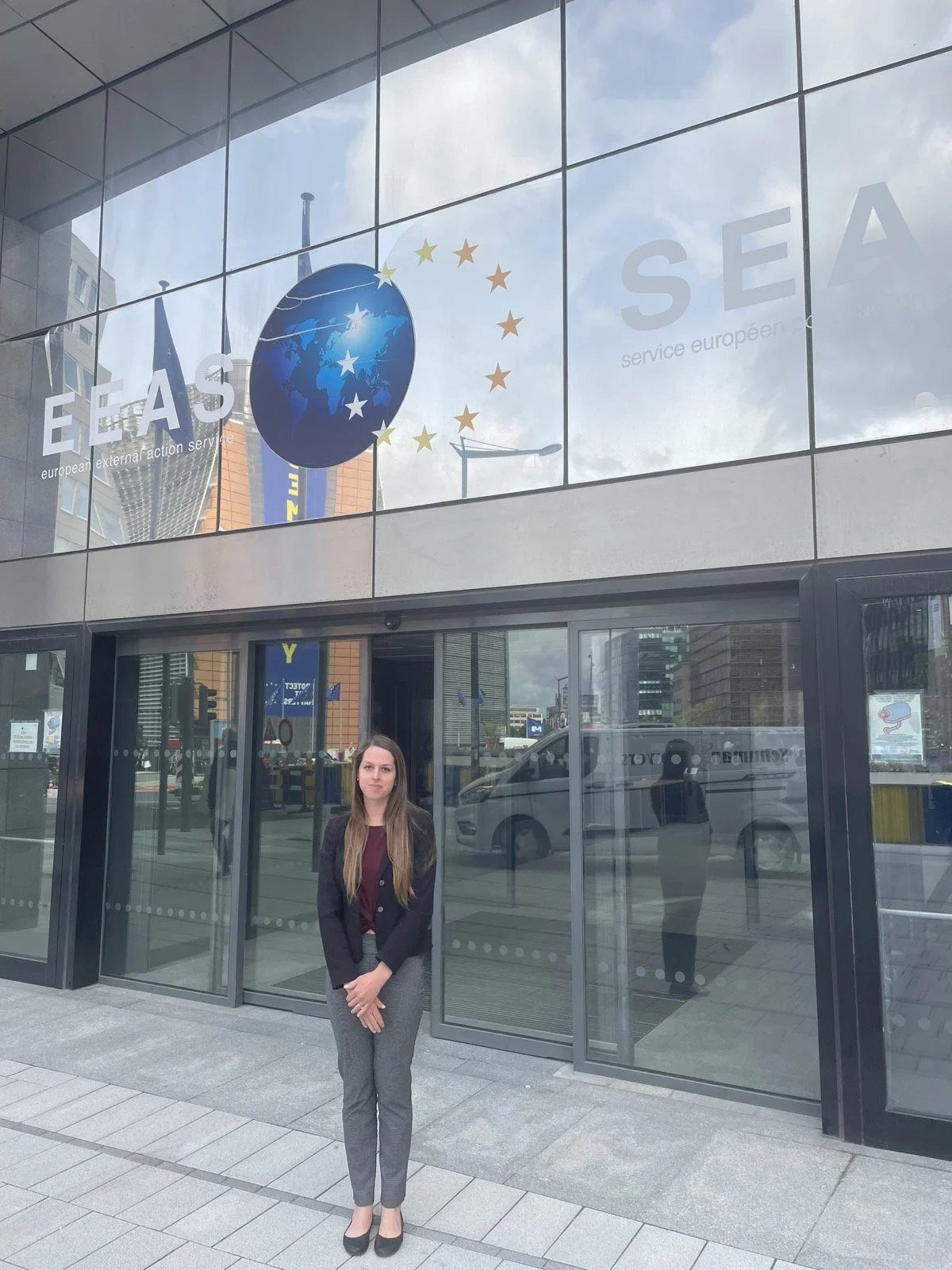
This week, our Policy Director Megan Khoo visited Brussels to launch our latest policy briefing, meeting with Member of the European Parliament and Chair of the European Parliament’s Delegation for relations with the People’s Republic of China, Engin Eroglu, parliamentary staff, EEAS, and civil society representatives.
Our briefing, published today, documents how four decades of Chinese industrial policy have systematically targeted strategic chokeholds in global supply chains. The People’s Republic of China now controls roughly 60% of global rare-earth mining, over 90% of refining, and close to 90% of finished permanent magnets. For Europe, the concentration is near-total at the stage that matters most: the European Court of Auditors found that essentially all of the EU’s processed rare earths, and 97% of its magnesium, come from China.
The briefing also examines how Beijing has begun to use this leverage. Throughout 2025, in response to US tariff measures, China curtailed critical mineral exports to both the United States and the EU, using licensing to extract concessions and map adversaries’ defence-industrial networks. The outcome was a trade and technology detente culminating in President Trump’s May 2026 visit to Beijing, where the US agreed to address Chinese concerns in exchange for restored mineral flows.
The EU’s Critical Raw Materials Act sets the right targets, but the European Court of Auditors found in 2026 that diversification is not yet producing results. Closing the gap, the briefing argues, requires faster supply-side delivery, demand guarantees, and credible deterrence.
Central to our argument is that Hong Kong is not peripheral to European economic security. It is central to it. The same infrastructure that moves European chips to Russia today is what would, in a Taiwan crisis, be used to move sanctioned components into Chinese defence supply chains and help Beijing evade financial countermeasures.
On the basis of this analysis, we make the following recommendations to the European Parliament and EU institutions:
Amend the European Critical Raw Materials Act to explicitly name China as a strategic dependency risk and require that single-country concentration assessments account for geopolitical leverage, not only supply disruption.
Formalise overarching EU coordination on China strategy, embedding the link between foreign, industrial, and environment-related policies on mineral dominance in a standing institutional architecture.
Recognise the strategic leverage of Hong Kong by making sanctions enforcement match the rhetoric and planning for a Taiwan scenario, including how to disrupt dual-use transshipment in real time and manage exposure to Hong Kong-cleared financial flows.
You can read the full briefing here.
While in Brussels, Mrs Khoo also attended a C4ADS roundtable on how open source data and analysis can be leveraged to combat the PRC’s digital surveillance and repression of ethnic minorities, including Hong Kongers, Uyghurs, Tibetans and other targeted groups.
Megan Khoo, Policy Director at Hong Kong Watch, commented:
“European policymakers are working on Hong Kong in one room and critical minerals in another. They must be in the same room. Beijing has spent four decades building leverage over the inputs Europe’s economy depends on, and Hong Kong is central to how that leverage would be used in a crisis. We are urging EU institutions to recognise that link, enforce sanctions properly, and plan now for a Taiwan scenario before the infrastructure is used against them.”

香港監察新簡報揭露中國稀土霸權對歐盟風險 促歐盟承認中國利用香港戰略優勢
香港監察政策總監Megan Khoo本週到訪布魯塞爾發表最新政策簡報,會見了歐洲議會議員兼歐洲議會對中關係代表團主席Engin Eroglu、議會職員、歐洲對外事務部和民間社會代表。
香港監察今日發表的簡報記錄了中國產業政策四十年來如何有系統地瞄準全球供應鏈的策略要地。中國現時控制着全球約60%稀土開採、逾90%提煉和近90%永久磁鐵成品。歐洲方面,這種集中度在最重要的階段幾乎達到100%:歐洲審計院(European Court of Auditors)發現,歐盟基本上所有經加工稀土和97%鎂都來自中國。
簡報亦研究了北京如何開始利用這種優勢。2025年全年,因應美國關稅措施,中國削減對美國和歐盟的關鍵礦產出口,同時利用許可申請取得妥協,並摸清對手的國防產業網絡。雙方最終達成貿易及科技緩解,2026年5月特朗普總統訪問北京期間,美國同意處理中國的關注事項,以換取恢復礦產出口流通。
歐盟《關鍵原材料法案》(Critical Raw Materials Act)設定了正確的目標,但歐洲審計院在2026年發現,分散來源尚未取得成果。簡報指出,填補缺口需要更快捷的供應方交付、需求保證和可信的阻嚇機制。
我們的中心論點是,香港並非歐洲經濟安全的邊緣,而是核心所在。現時將歐洲晶片輸送到俄羅斯的基礎設施在台灣危機中,同樣會被用來將受制裁零件輸送到中國國防供應鏈,幫助北京規避金融反制措施。
基於上述分析,我們向歐洲議會和歐盟機構提出下列建議:
修訂歐盟《關鍵原材料法案》,明確將中國列為戰略依賴風險,並要求單一國家集中度評估考慮地緣政治優勢,而非只看供應鏈中斷。
正式確立歐盟對中戰略的整體協調,將有關礦產壟斷地位的外交、產業與環境政策之間的關聯納入常設制度架構。
承認香港的戰略優勢,將制裁執行與針對潛在台灣危機的措辭和計劃配合,包括如何實時中斷兩用物項轉運及管理對香港結算資金流動的風險承擔。
請在此處閱覽簡報全文。
Megan Khoo在布魯塞爾期間亦參加了先進國防研究中心(C4ADS)圓桌會議,討論如何利用開源數據分析打擊中國對少數族裔的數碼監控和鎮壓,當中包括香港人、維吾爾人、藏人及其他目標群體。
香港監察政策總監Megan Khoo表示:
「歐洲政策制訂者在一間房討論香港議題,在另一間房討論關鍵礦產議題。他們必須在同一間房討論這些議題。北京用了四十年時間在歐洲經濟依賴的資源上建立優勢,而香港在如何在危機中利用這種優勢擔當重要角色。我們促請歐盟機構承認這種關聯,妥善執行制裁,並立即就潛在台灣危機制訂計劃,以防基礎設施被用來對付台灣。」
Photo: Pla2na on iStock